Showing posts with label football. Show all posts

Wednesday, 29 June 2016

Memorable, historic, unifying. This is England

What better reason to give in to the unrelenting clamour for me to restart blogging (an off-hand remark in passing every few months) than potentially the greatest night in England's glorious sporting history?

In a single night, 11 heroic and passionate warriors sacrificially gave their all to unite not just the nation but the whole continent. At a time of almost unprecedented political turmoil and cultural upheaval, what else could have brought about such a sense of togetherness and universal agreement? What else could have brought Wales, Russia, Iran, Australia, South Africa and the whole of Europe to share an undivided opinion? 
What other unifying force could have led to people from all spheres of life and from across the full political spectrum to be so unanimously of one mind? No longer are we debating formations, starting line ups, tactics or even what might constitute success. Such was the scarcely describable performance and result of the English national football team against Iceland. 

Unquestionably it will go down in history to be discussed, remembered and referred to. A landmark against which any future results even remotely similar (if that is even possible) will be compared. Already the benefits are being felt by the journalism industry, sprouting a plethora of articles discussing every possible angle and perspective. My personal favourite is this creative journalist's view on England's player ratings, he must truly have put his heart and soul into giving every single outfield player a 4/10. 

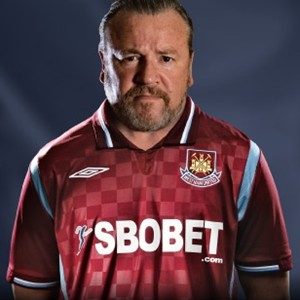
As the rugby and even cricket teams attempt to sow discord by actually winning, we can thank our footballers for their efforts in the cause of international unity. As we turn our attention to Wimbledon, the Olympics, the Ryder Cup (essentially anything to distract ourselves from what we just saw) let's be grateful that we potentially move on from a manager who has only lost one match in the Euros (Roy) to someone with his own outstanding record at the Euros (Gareth):


Exciting times ahead...

Tuesday, 9 June 2015

What Now for Tennis' Big Five?

It's hard to know what to do with yourself on the days after a weekend of sports like that. French Open finals, Champions League final, Women's World Cup, NBA finals, Ireland - England friendly, Canadian Grand Prix, Gemili running sub 10 seconds and the Epsom Derby, as well as the ongoing FIFA and Salazar/Farah controversies. You get to the Monday and the only consolation is that we don't have to endure any more England friendlies until November. 

With so much sport, we might have hoped for a few upsets to keep us on the edge of our seats but instead of a few little ones, we got just one big hit. Sunday's blistering performance from Stan Wawrinka has shaken up the tennis hierarchy. He has of course shown his capability before but this was something new. Beating an injured Nadal on hardcourt is nothing compared to toppling Djokovic on a 28 game unbeaten run in a Slam final. So where does it leave the big 5 of the men's game?


Djokovic - unquestionably the dominant player of the tennis world and clearly ahead of anyone else. His consistency and quality will see him atop the rankings for a long time yet and most likely favourite for every major for the next two years. Still some mental frailties when things are against him but he's so good that it rarely matters in the end. Currently on 8 Slams, it's hard to see him getting to Federer's mark of 17, especially as he's so far only ever once (2011) won more than one in a season.

Federer - appears to be in a strange place now in his career. Retains the class and style of his younger years but lacks the consistency to genuinely threaten at the business end of slams. Losses to the likes of Seppi, Cilic, Gulbis, Robredo and Stakhovsky in the last 2 years suggest that he is likely to have to settle for 17 Slams. With nothing more to prove or achieve, but still world number 2 for now and still capable of beating anyone, he does genuinely appear to just enjoy being on the tour and playing tennis. Of course he'd love to win another big one but he's content enough making a mockery of those who say he should retire just because he's no longer the best.

Murray - what could prove to be a very significant spring for Murray, with a breakout claycourt season. Winning two clay titles, beating Nadal in Madrid and looking thoroughly comfortable on the dirt. In significant tournaments (Slams/1000 series) this year he has only lost to Djokovic. Likely to overtake Federer for No 2 in the world later in the summer and almost a certainty to add to his 2 Grand Slams at some point in the next year or so. Definitely worth a flutter on him to build on a high level of confidence with a second Wimbledon title in a month's time. Probably won't have quite enough to overhaul Djokovic to top the rankings but he may well run him close soon enough. 

Wawrinka - simply one of the best individual performances I've ever seen. Devastating striking of the ball on such a regular basis. We've seen success from the likes of Del Potro and Soderling in the past just thumping it as hard as possible but nothing like what Stan produced. He will continue to be a threat, particularly at Slams where he turns it up a notch but such high risk tennis will never lead to a very top ranking. 

Nadal - ah Rafa, what are we going to do with you? One of the most physical, powerful and dominant players in history is something of a shell of his former self. So often throughout his career he has been held back by injuries and at some point it might need to be considered that he's not going to recover fully. Few players define competitiveness as much as Nadal but does he have it in him to beat Djokovic and Murray, especially from a current ranking of 10th? I hope so, but I fear not. 

Friday, 3 April 2015

The Neverending Story (Or the emotional rollercoaster of being an English sports fan)

An inspiring tale of adversity
and ultimately, Redemption
We all want a good movie to have a few ups and downs, plot twists and to put the us through a range of emotions. We want to be engaged and affected by the characters, to feel disconsolate and despairing because of their troubles, inspired and encouraged by their fortitude, and ultimately uplifted and contented by their triumphs. We want to feel like they've earned the happy ending, they've demonstrated enough vivacity and vigour to warrant our affections. We want to see them grow and develop as time progresses, overcome frailties and conquer obstacles. We accept their mistakes and lapses in judgement, we endure the frustrations and we retain a glimmer of hope regardless of the dire circumstance. Overall, we want some kind of satisfactory conclusion, ideally a famous and emphatic victory.

Beckham's England career - the ultimate
footballing redemption story
Is it not the same with the saga of supporting a national sports team? The players and managers, wins and losses, injuries and suspensions, qualification and seemingly inevitable elimination, the undying hope of ultimate success? Teams show growth and development, promise and aspirations, they suffer disappointments and under-achievements, they demonstrate great skill and physicality before lapsing into old habits and insipid performances. Forever our teams seem to be showing encouraging signs, in a period of rebuilding and looking to the future. 

How can it be with a constant turnover of personnel involved there is no significant change in the relentless cycle each of our major international teams follow? It's like a Bond movie, the characters are different each time and the events vary slightly but ultimately the same basic things happen. The only difference is Bond always come out winning. 
We've all known a bit too
much of this in the last 25  years

Let's look at the football team and our endless pattern of:
a) promising major tournament qualification campaign with new players involved and a building sense of hope and expectation
b) a few poor performances & results in friendlies against major nations to keep our feet on the ground
c) some kind of drama / media storm in the months before the tournament itself
d) an ultimately disappointing tournament with "wholesale changes needed"
e) back to the start, rebuilding, getting rid of dead wood and bringing in new faces to refresh the whole cycle

The truth is that our young players, initially showing so much promise and excitement, rarely become anything spectacular. Over the last 20 years there has been 13 English winners of the Young Player of the Year award but just 7 Player of the Year awards. Only Gerrard and Rooney have won the Young Player and gone onto win the main one. Even worse, the Football Writers award has gone to just 5 Englishmen in 20 years. The issue of an increasing influx of foreigners is for another time, but the lack of development from promising youngster to world-class talent is sadly reflected by our national team never quite making the step up. 

The table shows our
FIFA world ranking since 1992. I nearly used the word "progress" but evidently that's not really suitable. What it does show is that with all the ups and downs in rankings, we should have done better than one semi-final in the last 25 years.


Following the cricket or rugby teams is hardly much better. The rugby team have of course known some recent success with the World Cup in 2003 and some 6 Nations wins but when you see the coach describe your team as "courageous" you know there's something wrong. Similar to how Scotland are repeatedly described as brave without ever improving, we have now come runner up 4 years in a row and are apparently still a young team maturing and building towards the world cup. Rarely do you hear a blunt opinion such as that of the RFU Chief Exec who is demanding higher standards. With less range of teams to compete against there is more consistency in terms of rankings but the same cycle of hope and disappointment goes on here.

I can't bring myself to write about the cricket team at the moment, and I don't think series against New Zealand and Australia this summer are going to help much.

Wednesday, 11 June 2014

Who's Daring to Dream?

Among the many things I love about the World Cup is the huge variety of opinions, articles, talking points, disagreements and perspectives it provokes. Go on any decent website and there are as many different articles as you could hope to read, discussing every possible aspect of the tournament. You can read about the teams, players, previous tournaments, the infrastructure, the impact on the hosts, impact on previous hosts, basically anything.

But without doubt the best thing (possibly including the matches, that remains to be seen) is the debate (yes I mean arguments). Who's in your All-time XI, who's in your fantasy team, who will win the Golden Boot, do Messi/Ronaldo need to win to be considered among the best players ever, who should start for England and how far will we get? There is virtually nothing on which you'll find yourself in complete agreement with someone else. If you do, the only thing I can recommend is you debate things a bit more.

Of all the contentious issues, there is one that most clearly identifies the optimists, pessimists, realists and idiots. How will England do? 
A couple of years ago I wrote a post about England's chances going into Euro 2012. Before the tournament, there was a genuine sense of realism about the England football team and our chances in such a way that there was no huge feeling of devastation when Diamanti tucked home the decisive penalty. Winning the group failed to inspire any genuine hope and rightly so given the insipid performance produced against the Italians.

So with it all kicking off on Thursday evening, how are we feeling this time around? There's a certain satisfying symmetry with England starting where they left off in the Euros, aiming to avenge that defeat and put right the dour and lacklustre style of play from 2 years ago. Lots has been made of the exciting young talents of Oxlade-Chamberlain, Sterling, Lallana and Barkley but whether they're quite enough to inspire blind optimism in a naturally wary nation remains to be seen. Surely it will be the same old story. Surely warm up draws against the might of Ecuador and Honduras tell us all we need to know. Surely...

I can't help myself, I'm going to put it out there that by 1am on Sunday morning, there'll be the faintest of glints in the eye of even the most cynical of England fans. 

Wednesday, 24 July 2013

Why Do We Support Who We Do?

At work, we've done a sweepstake on the Women's Euro 2013 tournament in Sweden. To be honest, we love a sweepstake and organise one for virtually any (major) event, so that's probably not much of a surprise. Sports events, baby weights, how late someone will come back from lunch, you name it we sweepstake it. And yet despite the inane nature of them and the almost laughable sums of money to be won, they seem to stir an astonishing loyalty in me for teams I scarcely knew existed much less supported.

This spring I found myself quite unexpectedly a die-hard Kolkata Knight Riders fan for the IPL 2013 campaign. Despite the fact that a few weeks before I had had to do comprehensive research before I could even a name an IPL team, I genuinely cared what happened in KKR's games. I was frustrated by Yusuf Pathan getting out early, Kallis scoring too slowly, Gambhir never converting a start and the failure to select Lee or Ten Doeschate. I downloaded the app and had ITV4 on constantly. My point being, I became a real fanatic. Sadly, the reigning champions and theoretical challengers for the title ended a dismal 6-10 record and early elimination.

Then comes the Women's Euros over the last couple of weeks. The sweepstake is organised, the team names on the bits of folded paper inside the mug. I draw France. Now my knowledge of women's football was such that I knew the USA were the best, and that England were decent, but beyond that, couldn't exactly claim to be an expert. A quick bit of research and I realise France are pretty decent and in with a shout. £16 here I come. Then, when it all came to an end against a stubborn and organised Danish team in the quarterfinals, I found myself genuinely disappointed (and not for the sake of £16 potential winnings).

The reason for my aimless ramblings is that it got me wondering how we come to form affiliations with teams, develop affections or even fanatical passion. It's probably fair to say that most people support a sports team of some description, whether that be football, cricket or tennis, club or national teams. And probably even more follow and support certain individuals in sports like tennis, F1, snooker or golf. 

Glory hunters...
With individuals it's often determined by their nationality (would anyone support Andy Murray if he wasn't British?), as much as by their personality or sporting prowess. But with club teams it can be apparently arbitrary but no less meaningful. Of course a lot support their "local" club (I use speech marks because that usually means the closest team that are good) but there seem to be all manner of other reasons as well - parents' teams, obscure links as a child, kit colour, favourite players etc. I decided to start supporting Sheff Wed around the age of 12 for no particular reason other than they were in the Prem and I didn't support anyone else. 

Most would agree that the most passionate/fanatical fans would tend to be those who have a geographic/nationalistic link to their team but there are unquestionably other reasons and factors that lead to fervent support. Why do you support who you do?

Sunday, 21 April 2013

Championship Ready for Relegation Battle


With just two rounds of matches left (3 for Blackburn, 4 for Millwall), there are still 10 teams that could mathematically join Bristol City in slipping from the 2nd tier in a fortnight's time. There are so many teams still involved that the number of 6-pointers is too many to copy out here without just recreating the fixture list. Of course realistically Ipswich are almost certainly safe, and it seems unlikely that Millwall will fail to pick up enough points in their remaining four games to avoid being a cup-run casualty. The three teams currently on 51 points are evidently in the most trouble but anyone could theoretically have an unpleasant and uncomfortable afternoon come May 4th.

More relegation woes for Wolves?
In terms of form, Wolves and Barnsley appear to be unlikely to pull themselves out of the mire. Wolves have 1 win in 4, with 3 defeats, while Barnsley's impressive recent draws against Palace, Cardiff, Derby and Forest won't count for much if they can't arrest a 5 game winless run. Peterborough on the other hand are near the top of the form table. They lost 3-1 at the weekend to Derby, but were undefeated in 10 prior to that and certainly seem like they have enough fight to avoid the drop.

Given the absolute shambles at the club currently, it is no great surprise that Blackburn are right in the mix. Two recent wins stopped a slide which saw them collect just 2 points from 21, and may prove sufficient to prevent the biggest crisis of all, another relegation. That said, I can't imagine the squad will have the same fighting spirit as their neighbours, so if they fail to pick up points from their game in hand (away at Millwall), they could yet be in serious trouble. Huddersfield have probably the easiest fixtures (Bristol City away and Barnsley home) from the teams down there but a Yorkshire derby against a battling Barnsley could easily be the crucial game to watch if Town can't get a result away at Bristol.

Jermaine Johnson - the reason
Sheff Wed will escape the drop
Then there's a whole host of teams of 55 points, needing just a win from their remaining games to secure Championship football for next season. Wednesday travel to Peterborough and then host 'Boro on the last day, Blackpool host Derby and then go to Bolton, Burnley are away at Wolves then home to Ipswich while Millwall have 4 games left, 3 of which are at the Den. Of the four teams, only Burnley seem to be in any danger realistically - they have only 1 win in 9 (against Bristol City) and face two other teams in the fight, and so could quite feasible slip back in.

Jordan Rhodes - pretty much the only
good thing about Blackburn's season
Whatever happens over the next two weeks, it is a fascinating end to the season. Last year, 41 points would have been enough to avoid the drop, and this year Bristol City are already relegated despite having that total. Last year, the final gap between 11th and 19th was 14 points, this year it's currently 4. Quite a few of the teams here could very feasibly still finish in the top half of the table. It may yet come down to goal-difference, in which case Huddersfield will be in all manner of trouble, while Sheff Wed, Blackburn and Peterborough are so close that they might end up looking at goals-scored.

In terms of the odds, bookies seem to be following the league table, with Barnsley favourites for the drop (1/2), Wolves (8/11) and Peterborough (4/5) next most likely and Huddersfield (9/2) and Blackburn (11/2) seen as the only other realistic candidates. Wednesday (25/1), Blackpool (66/1), Millwall (66/1) and Burnley (80/1) appear to be pretty safe as far as the bookies are concerned.
What's certain is that it'll be coming down to the last day, and the edges of lots of seats will be under severe stress at around 2.30pm on Saturday 4th May...

PosTeamPldWDLGDPts
14Ipswich Town44151217?1357
15Burnley44141317?155
16Blackpool44131615?255
17Millwall42151017?855
18Sheffield Wednesday44151019?955
19Huddersfield Town44141218?2254
20Blackburn Rovers43131416?853
21Peterborough United4414921?951
22Wolverhampton Wanderers4414921?1151
23Barnsley44131219?1651
24Bristol City (R)4411825?2041
The bottom of the table as things stand today

Friday, 12 April 2013

Will ladies' football ever be a truly popular national sport?

This weekend sees the beginning of the 3rd Women's Super League (WSL), the elite competition of ladies' football in the UK. Eight clubs now compete to be crowned the greatest in the country. With a competition specifically designed to raise the profile, standard and professionalism of the game now entering its 3rd season, has it started to yield the desired effects? 

In terms of money, it faces the dilemma of wanting to increase the finances involved, but simultaneously avoid a huge imbalance in the favour of larger clubs like Arsenal and Chelsea. Consequently, clubs are currently only allowed 4 players on a salary of £20,000 or more. And, yes, that is an annual salary.

At the end of last year's WSL season, the BBC presented a Q&A with the FA Head of National Game, Kelly Smith (read it here, and its recent follow up video here). Inevitably the tone was positive, that progress was being made and that interest and support was up. Unquestionably, overall attendance has increased 10% and the highest attended individual match (5052 spectators at Arsenal vs Chelsea) was more than twice that of 2011, although it taking place at the Emirates may have benefited this somewhat as well.

Most sports across the UK have seen a significant swell in interest and participation post London 2012, and women's football is no exception. At the Olympics, interest was high, with an average attendance of 25000, including 70,000 seeing Team GB beat Brazil in the Group Stage, and 80,000 watched the USA beat Japan in the final, both at Wembley.

But is there a danger that it will be like many other Olympic sports, in that the general public don't really care about it unless there is a major tournament on, or it happens to be on TV? How many people go onto the BBC's Women's Football page specifically to look up results or get the latest club news? Who knows what the Cyprus Cup is, or whether beating Canada twice in a month is remotely significant or impressive?

Last weekend Rachel Yankey became England's most capped football player, joint with Peter Shilton, with 125 national team appearances. A huge congratulations to Rachel for such a feat, but I fear it will be looked upon a bit like players who play hundreds of times for minor nations in the men's game, becoming more of an obscure pub quiz trivia answer than an achievement inspiring awe and respect.

Women's football is hardly new in England, having been played (and popular) in the early 1900s, until what turned out to be a 50 year ban from 1921 stopped its genuine progression and growth in its tracks. And now that men's football is so utterly universal and financially significant, it will take a massive ongoing effort from all quarters for the ladies' game to get a real foothold in the market. The reality is also that a large percentage of the female population still strongly dislike football. Saturday night dates ending at 10.30pm for Match of the Day may have something to do with this, but until there is a wider enjoyment of the sport, it may be hard for the game to really grow and develop.

Although it is unfair to compare to the men's game, there are definitely positive signs that the game won't sink into a post-Olympics hangover and back into relative obscurity. Chelsea have just signed a Brazilian superstar for the new season, ESPN are continuing to provide significant WSL coverage, the BBC are showing some of the matches from this summer's European Championship and the FA WSL Cup has ongoing sponsorship from Continental, one of the biggest sponsors of major football tournaments in the last 20 years.

In terms of the national team, there are an awful lot of similarities to the men's side of thing (unfortunately). Looking ahead to this summer's European Championships in Sweden, we currently sit 7th in the FIFA rankings, not quite able to break into the very top levels, but always close enough to get our hopes up. Sadly, we appear to be similarly afflicted by major tournament woes. At the Olympics, Team GB won all 3 group games, including beating Brazil, only to tamely limp out 2-0 to Canada in the Quarters. At the 2011 World Cup, we again won our group, including a victory over eventual champions Japan, only to lose in the first knockout round, on penalties, having conceded an 88th minute equaliser. They are still England after all.

Sunday, 7 April 2013

Respect for Referees still a Real Problem

Despite the FA's Respect campaign being nearly 5 years old, I don't think many would argue the fact that football is still a long way behind other sports in terms of the respect shown to match officials. We still see players disputing virtually every decision and appearing outraged the instant a foul is committed. We still have players surrounding the referee and managers storming onto the pitch at full-time. And how often do TV cameras still catch players shouting profanity at the ref after a decision goes against them?


Scenes like this are still too familiar
Of course there has been improvement, such as a significant decrease in the number of bookings for dissent, but the truth is that fundamentally players and managers still complain almost instinctively, usually before the ref has even had a chance to blow the whistle. Is it not embarrassing to see players cry out to the ref as though he's committed war crimes when in fact he's already in the process of giving the foul? 

Watching the Six Nations recently highlighted just how well managed the disciplinary side of the game is in rugby union, and consequently emphasised how much more football has to do. The ref calls over the offending player and the captain, has a quick chat (which everyone can hear over the mic) and everyone gets on with it. There is the odd question in reply but no pathetic whinging or mock despair and certainly no aggressive abuse. Players accept the decision, and potential punishment, maturely and with minimal fuss. Even for controversial decisions there is limited argument, due in part perhaps because the players have the sense to realise it is of no benefit, but is more likely to be detrimental if anything. There are sanctions such as the loss of 10 metres or the reversal of a penalty for excessive arguing. 

Of course there are differences between sports, not everything is immediately transferable. The loss of 10 metres for example would have virtually no effect in football but can be very significant in rugby. The differences between officiating football and rugby, from the perspective of the referees themselves, was discussed in a group interview recently (it can be read here). A major point of discussion was the relationship between players and referee, which to me seems almost entirely absent in football and certainly a long way from the ideals set forth by the Respect campaign.

A while back Gary Neville wrote a piece about the futility of arguing with refs, which had taken him years to realise. Far from having even the slightest influence on a referee's decision, constant complaints and aggressive behaviour proves much more likely to harden a ref's resolve against you. Have you ever seen a decision overturned because players complain or get in the official's face? Why then does it continue? Players need to be better educated to this fact, managers need to do more to control them and all round the professionals need to set a better example. It's completely in the culture and nothing is going to change while young players at the clubs and watching on TV see how their idols behave. 


Not exactly powerful and inspiring imagery
The Premier League has a Fair Play League table, in line with UEFA's equivalent, and points are awarded not just for avoiding yellow/red cards but also for respect to referees, behaviour of team officials and even behaviour of the fans. The scoring system can be read here. Rewards are given out for such things but the reality is that a fairly insignificant cash prize isn't much of an incentive to a Premiership club, so as long as they believe that pressuring referees enhances their chances, why would they ever change? 

Wednesday, 15 August 2012

A Post-Apocolympic Sporting World

If you're being honest with yourself, as a British Sporting fan, did you really think we would have quite such a successful Olympics

Surely something is amiss when we experience this level of genuine success with no 'buts' and particularly when all the logistical side of things ran so smoothly as well. A lesson in how to defy multiple British self-perceptions in one spectacular fortnight. After years of being faithful (and perhaps ever so slightly masochistic) spectators of great anticipation preceding deflating and disappointing sporting performances something was very different this time. It is unlikely that many of us will have in our lifetime either another London Olympics or a time of such unified national fervour and support. Similarly it's pretty unlikely that any time soon Team GB or its composite nations will see a repeat of such unbridled sporting success.

There was such a build up that frankly most of the country was pretty sick of the whole thing before it even started and yet as a nation we were won over by relentless success. Barely a day seemed to go past when we didn't win a medal in a sport that we barely knew existed, alongside overwhelming dominance in the likes Cycling and Rowing. Suddenly the whole nation, sporting-sceptics included, found itself being swept along about Canoeing, fired up about Trap Shooting and struck by Taekwondo. 

So now we find ourselves back in the regular swing of things. The football season has begun again in earnest, with the League Cup, Charity Shield and random irrelevant international friendlies. It's hard to see how anyone can stop City from dominating the Premiership this season. A slow start might put them under pressure and make the race interesting, but the strengthening done by the chasing pack doesn't seem like enough to make the difference. Chelsea and Arsenal have spent a lot and brought in some excellent players but have lost their respective talismen with Drogba departing and Van Persie making his intentions clear. It seems as though Utd have sealed the RVP deal so they could seriously threaten, as they almost always do, but the likes of Liverpool and Spurs, if anything, seem weaker than last year. That said, the new manager effect is an unpredictable enigma at the best of times. At least we don't have much time to wait to find out.

Meanwhile, the rest of the sporting world continues as though it is any old August. London 2012 and the great success of Team GB has no bearing now on the England - South Africa cricket series, the US Open tennis, the AVIVA Premiership rugby and Formula 1 returning to action from its mid-season break. Plenty to keep us interested then.

Tuesday, 26 June 2012

Why Aren't We That Disappointed?

And so, after two weeks of increasingly disappointing performances somehow produced an increasing level of logic-defying but futile hope, the inevitable finally came on Sunday evening

England were very much as England were expected to be; relatively solid and disciplined, fairly uncreative and generally hard-working. They also profited from good fortune on a number of occasions - the Swedish goalie choosing to fall over rather than save Walcott's shot, the byline referee proving himself utterly redundant in failing to achieve the specific role for which he exists against Ukraine, and Italy apparently having watched an 'Art of Finishing' video by the offspring of Emile Heskey and Andy Carroll. 

Despite the temporary and somewhat diluted joy of winning the group, the whole tournament had a decidedly resigned feel to it for an English fan. Admittedly, there will be some of you reading this who should hang their heads in shame because, despite my best warnings, you allowed yourselves to believe. One such regular reader (an assumption grounded on absolutely zero evidence), Sir Bobby Charlton, appears to have allowed the inhalation of some Olympic fumes to cloud his rational judgement.

But I trust the majority of you did not succumb so easily to such a moment of weakness, instead holding fast to a steely and negative resolve, thoroughly founded in both reality and experience. I do not pretend to be any kind of national sentiment thermometer but the pervading attitude seems to be more of melancholy acceptance rather than outrage or bitter disappointment. Of course there might be a number of reasons for us generally taking something of an 'oh well' attitude:

1) Losing to Italy saved ourselves the embarrassment of what would surely have been Bloemfontain Part 2. Personally I couldn't see Gomez, Klose et al. replicating the same profligacy as Balotelli and Cassano. 31 shots and 0 goals isn't exactly a devastating return.
2) We are truly taken in by the frankly absurd positivity coming out from both media and management, after all, we didn't even want to win, we were just there for the learning opportunities and as character building for the young players (by the way, Welbeck is the only player under 25 who started the match, and 4 players were over 30, but let's not mention that).
3) We just didn't expect that much. We recognised that the reality was that we were outplayed in 3 of the 4 games, and pretty unconvincing in the other one, so although we were miraculously unbeaten, we didn't deserve to go any further, and can just be satisfied that we had a go. But even that doesn't really hold up to scrutiny...

Heading home -
probably a good idea
As I looked at before, England were never going to win with glorious passing or attractive attacking moves, we just don't have the technical ability. What was so disappointing to watch then on Sunday was that we seemed so slow and tired as well. Where was the pace, power and stamina that the English Premiership is renowned for? Instead, the slow and not exactly attractive Italian build-up wore us down and by the end we were too weary to even chase after them having given the ball away (one thing we proved experts at).

Yes it was penalties, and yes, things could have been so different. Of course I would much rather be supporting England than Italy on Thursday night but the truth is we were pretty dismal all tournament and I think we can all agree that it's not the end of the world that it ended when it did.

Monday, 4 June 2012

Reasons to be Fearful

As English football fans, we (this weekend I suppose that's some form of Royal 'We') seem to be stuck in some form of sadistic biennial cycle, which we can observe and discuss but ultimately do absolutely nothing about. Every other autumn, we forget the summer that's just passed, and start again with fresh belief. New players, often a new manager, new qualification campaign, new hope that this time things will be different. Generally speaking we qualify convincingly (Steve McLaren aside) and often pick up narrow victories in thoroughly irrelevant friendly matches.

Consequently, we normally have reason to be relatively optimistic about our chances heading into major tournaments. Despite history not being in our favour, we do have one of the strongest domestic leagues and genuinely world-class players (and theoretically managers).

It's all very promising until we actually play, at which point a mixture of ill-discipline, goalkeeping blunders, refereeing errors, penalties and just poor performance combine to ensure the return of that sickening anticlimactic dismay and disappointment with which we're all so familiar. And thus the cycle is completed again, with cries of "the same old story", "there we go again" and "I knew it" echoing out in pubs and lounges across the country.

And yet, 2 years later, against our better judgement and logical reasoning, we believe again that this could be our year, and maybe football will come home after all. Then the tournament goes down we all knew it would and the players have an extra week or two of summer holidays. The same old story.


Well this year, leading up to Euro 2012, it's different. Maybe I'm faithless but I can't see any reasons to be cheerful. More like a few reasons to be fearful.

The main one is our squad. When announced it made most of the country grimace and want to close the web page or turn off your phone. It was like when you're watching a match and it becomes increasingly obvious the team you're supporting is going to lose, all you want to do is leave the stadium or turn the TV off and forget about it.

The originally named squad was bad enough, complete with the inexplicable omission of Micah Richards and Aaron Lennon, alongside the equally inexplicable inclusion of Stuart "I bring absolutely nothing to the team" Downing and Andy "I played a bit better in May so that's good enough to start for England." CarrollBut now that the physio's room is like a scene from Saving Private Ryan, we're calling on pretty much anyone who can even count the Lions on our shirts. In all honesty I'm nearly ready to check I've got my passport handy in case the barrel-scraping gets out of hand.

Welbeck demonstrates to Carroll
the general idea behind being a striker
Make no mistake, wins over Norway and Belgium are not sufficient to convince us that maybe there is a shred of hope after all. All this talk of being the new Greece '04 and taking the title with tactical defensive displays is absurd. Yes, we did contain the opposition well and keep two clean sheets, but we weren't exactly playing Spain or Germany were we? If we can do the same against France next Monday, maybe then we can discuss it. I am glad that endless cycle of hope and despair is broken, even if it is by having zero hope and zero expectation. So much so that even that well-known nation of "soccer" analysts, the USA, has picked up on our dismal chances this summer.

I'm a fan of Hodgson, I think he's an astute guy and should ensure we don't embarrass ourselves, but I doubt he's ever going to have the nation on its feet in elation. That said, I don't subscribe to the view that we only want to win if we win well. Look at Spain's results from the World Cup:
Spain 0-1 Switzerland (Groups)
Spain 2-0 Honduras (Groups)
Spain 2-1 Chile (Groups)
Spain 1-0 Portugal (Last 16)
Spain 1-0 Paraguay (QF)
Spain 1-0 Germany (SF)
Spain 1-0 Holland (Final - AET)

If we come away with a semi-final appearance, and only a few goals scored, it'll be our most successful performance since '96 and no-one should complain at that (we will though)